

Everything UK businesses need to know about iOS app development costs — from developer day rates to hidden fees — so you can budget accurately and invest confidently.
Updated January 2026 · 12 min read · Hiring & Costs
In this guide
- Why iOS app development commands premium pricing
- UK iOS developer rates in 2026
- iOS app development project cost breakdown
- Hidden costs to budget for
- How to reduce costs without sacrificing quality
- Frequently asked questions
- Related resources
Why iOS App Development Commands Premium Pricing
iOS app development typically costs 10–15% more than equivalent Android development, and there are concrete reasons for this premium. Apple’s ecosystem — whilst powerful and profitable — imposes specific requirements that directly add to development costs.

The Apple Ecosystem Tax
Every iOS app development team needs Mac hardware. Unlike Android development, which runs on any operating system, iOS development requires macOS and Xcode — Apple’s integrated development environment. A development-grade MacBook Pro costs £1,800–£3,000, and proper testing requires multiple iPhone models (£800–£1,200 each) to cover different screen sizes and capabilities.
The Apple Developer Programme costs £99 annually per developer account, granting access to beta iOS releases, testing tools, and App Store submission. Android’s equivalent costs just £25 — once.
App Store Review Process Impact
Apple’s App Store review is rigorous. Every iOS app development project must budget 1–2 weeks for submission and review. Approximately 40% of first submissions receive feedback requiring changes, and each resubmission cycle adds time — and therefore cost.
This scrutiny delivers real value: iOS apps are generally more polished and secure than their Android counterparts. Users trust the App Store, which translates to higher download rates and better monetisation for iOS projects.
Platform-Specific Features That Require Specialist Skills
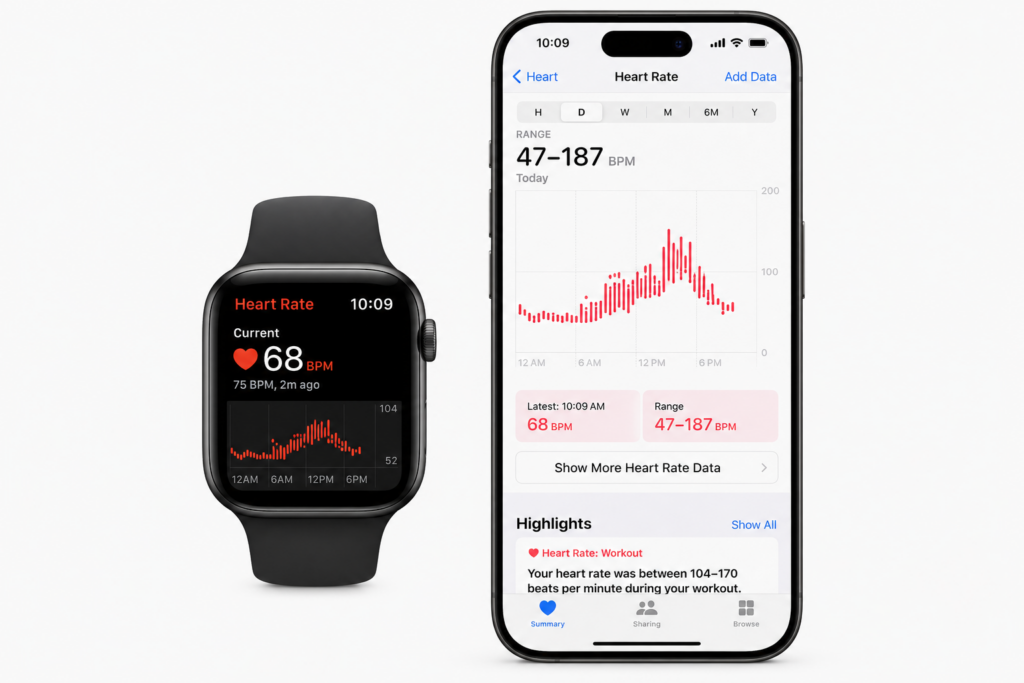
iOS app development often leverages Apple-exclusive features: Face ID and Touch ID for biometric authentication, Apple Pay, HealthKit, ARKit for augmented reality, and integration with Apple Watch or other ecosystem devices. Developers who can implement HealthKit or ARKit correctly command significantly higher rates than those building standard UI screens.
💡 Key insightFor businesses targeting affluent consumers, iOS app development delivers better ROI despite higher upfront costs. iOS users spend 2–3× more on apps and in-app purchases than Android users. A £50,000 iOS app can generate returns faster than a £40,000 Android equivalent.
UK iOS App Development Developer Rates in 2026
The cost of hiring iOS app development talent varies dramatically across experience levels and UK regions. Understanding these rate structures helps you budget accurately and hire appropriately for your project’s complexity.

Junior iOS Developers (0–2 Years)
Junior iOS app development specialists know Swift basics and can implement screens from design specifications. They need guidance on architecture and senior code review. For simple apps or well-defined feature additions, juniors offer good value — but they lack the experience for payment processing, real-time features, or enterprise integrations.
| Region | Annual Salary | Hourly Freelance |
|---|---|---|
| London | £32,000–£48,000 | £35–£55 |
| Manchester / Birmingham / Leeds | £28,000–£40,000 | £30–£48 |
| Edinburgh / Glasgow | £29,000–£42,000 | £32–£50 |
| Remote (UK-based) | £28,000–£42,000 | £30–£50 |
Mid-Level iOS Engineers (2–5 Years)
Mid-level developers are the workhorses of iOS app development. They build features independently, integrate third-party SDKs, implement complex UI animations, and write maintainable code. A mid-level iOS engineer is comfortable with MVVM architecture, the Combine framework for reactive programming, and SwiftUI for declarative UI. Most iOS projects in the £40,000–£80,000 range rely on mid-level developers supervised by a senior architect.
| Region | Annual Salary | Hourly Freelance |
|---|---|---|
| London | £52,000–£78,000 | £60–£90 |
| Manchester / Birmingham / Leeds | £46,000–£64,000 | £52–£78 |
| Edinburgh / Glasgow | £48,000–£66,000 | £54–£80 |
| Remote (UK-based) | £48,000–£70,000 | £55–£85 |
Senior iOS Architects (5+ Years)
Senior iOS app development specialists make the decisions that determine whether your app succeeds technically. They choose the right architecture, design data flow, optimise for performance at scale, and prevent the technical debt that slows future development. For projects over £80,000 or requiring sophisticated features — real-time collaboration, video processing, or complex animations — senior involvement from day one prevents costly mistakes.
| Region | Annual Salary | Hourly Freelance |
|---|---|---|
| London | £78,000–£110,000 | £90–£140 |
| Manchester / Birmingham / Leeds | £66,000–£92,000 | £78–£120 |
| Edinburgh / Glasgow | £68,000–£95,000 | £80–£125 |
| Remote (UK-based) | £70,000–£100,000 | £85–£135 |
Lead iOS Engineers & Technical Architects (8+ Years)
Lead iOS engineers operate at the intersection of technology and business strategy. They evaluate whether to build native iOS, cross-platform, or progressive web apps; they design systems that scale to millions of users; and they make build-versus-buy decisions. Expect £95,000–£130,000 annual salary or £110–£160 per hour on contract. These specialists are expensive but essential for large-scale iOS app development programmes.
iOS App Development Project Cost Breakdown
Project-based pricing depends on app complexity, feature count, and integration requirements. Here is what iOS app development actually costs across different project tiers in 2026.
Simple / MVP
£18,000–£40,000
8–14 weeks
Medium Complexity
£40,000–£90,000
4–7 months
Enterprise
£90,000–£300,000+
6–18 months
Modernisation
£45,000–£120,000
3–9 months

Simple iOS App / MVP (£18,000–£40,000)
A simple iOS app development project validates your core concept without unnecessary features. It typically covers 3–5 core screens with standard iOS UI components, user authentication, basic data storage, API integration, push notifications, and analytics. This tier suits startups testing market fit, businesses digitising a simple service, or companies launching an internal tool.
Examples include: a loyalty programme app, a booking system for appointments, a content delivery app, a simple productivity tool, or a location-based service. The timeline assumes clear requirements and available designs. Scope creep — adding “just one more feature” — is the primary reason simple iOS app development projects exceed budget.
Medium-Complexity iOS App (£40,000–£90,000)
This tier represents most production-ready iOS app development projects for established UK businesses. A medium-complexity app typically includes 10–20 screens with custom UI design, complex user flows and navigation, payment integration (Stripe, Apple Pay), real-time features such as chat or live updates, offline functionality with data synchronisation, photo and video capture, social features, advanced animations, and integration with 3–5 third-party services.
Examples include: e-commerce platforms, social networking apps, on-demand service marketplaces, health and fitness trackers, financial management tools, or media streaming applications. Budget 4–6 months for development plus 2–4 weeks for App Store submission and launch preparation.
Complex Enterprise iOS App (£90,000–£300,000+)
Enterprise iOS app development suits large organisations, regulated industries, or products requiring sophisticated technical implementation. Features typically include 20+ screens with brand-specific UI, advanced security (biometric authentication, encryption at rest and in transit), complex business logic, multi-role access control, offline-first architecture, integration with enterprise systems (CRM, ERP, databases), compliance requirements (GDPR, HIPAA, SOC 2, PCI-DSS), real-time collaboration, advanced media processing, white-labelling or multi-tenant architecture, comprehensive admin dashboards, and optimised iPad layouts.
Examples include: banking and fintech platforms, healthcare apps handling patient data, logistics and supply chain management tools, enterprise resource planning systems, or complex B2B marketplaces. A healthcare app requiring NHS integration and HIPAA compliance will take considerably longer than an internal productivity tool, even with similar feature counts.
iOS App Modernisation (£45,000–£120,000)
Many businesses have iOS apps built 5–10 years ago that feel dated. iOS app development modernisation brings these apps current: modern Swift code, SwiftUI interfaces, accessibility features, Dark Mode support, and performance optimisations for current iPhone hardware. Modernisation costs less than building from scratch because core business logic already exists. However, extensive technical debt sometimes makes a full rebuild more cost-effective. A thorough technical audit (£5,000–£12,000) will clarify the right approach.
Hidden Costs in iOS App Development
The developer fees are obvious, but several additional costs catch businesses by surprise. Budget for these from the start to avoid mid-project funding gaps on your iOS app development project.
Professional iOS App Design (£5,000–£30,000)
Users judge apps in seconds. Professional design is non-negotiable for commercial iOS app development. Allocate 15–25% of your total budget to design:
UX research and user testing typically costs £3,000–£8,000 and validates assumptions before expensive development begins. UI design (wireframes through to high-fidelity mockups) runs £5,000–£25,000 and covers screen designs, component libraries, and design-handoff documentation. For apps with many screens or planned future expansion, a design system (£8,000–£20,000) ensures consistency and accelerates future feature development.
Attempting to skip professional design costs far more long-term. Users delete apps that feel confusing or look unprofessional within minutes — your iOS app development investment requires design to succeed.
Backend Development and Infrastructure (£12,000–£60,000)
Unless your app is entirely local, you need backend infrastructure. API development costs £10,000–£50,000 depending on complexity. Database design and implementation adds £3,000–£15,000. Server hosting on AWS, Google Cloud, or Azure typically costs £100–£2,500+ per month, scaling with your user base. If your app handles images, videos, or large files, budget £50–£800+ per month for CDN and media storage.
Many iOS app development teams focus only on the app itself and underestimate backend requirements. Budget backend development at 40–60% of your iOS development costs for apps requiring significant server-side logic.
Third-Party Services and Integrations (Variable)
Modern iOS app development relies on specialist SaaS tools rather than building everything from scratch. Budget £100–£800 monthly for a typical commercial app, scaling with usage:
Payment processing via Stripe or Braintree charges 1.4% + 20p per transaction. Push notifications (Firebase, OneSignal) cost £0–£400 per month based on volume. Analytics platforms such as Mixpanel or Amplitude range from free to £1,200 per month. Crash reporting (Sentry, Crashlytics) costs £0–£300 per month. Maps APIs (Google Maps, Mapbox) run £5–£600 per month based on API call volume.
App Store and Developer Programme Fees
The Apple Developer Programme costs £99 annually and is required before you can submit any app. Apple’s commission is 30% of revenue — dropping to 15% for businesses earning under £1 million annually through the App Store, and to 15% after a subscription’s first year. Physical goods and services sold through external means are exempt from this commission.
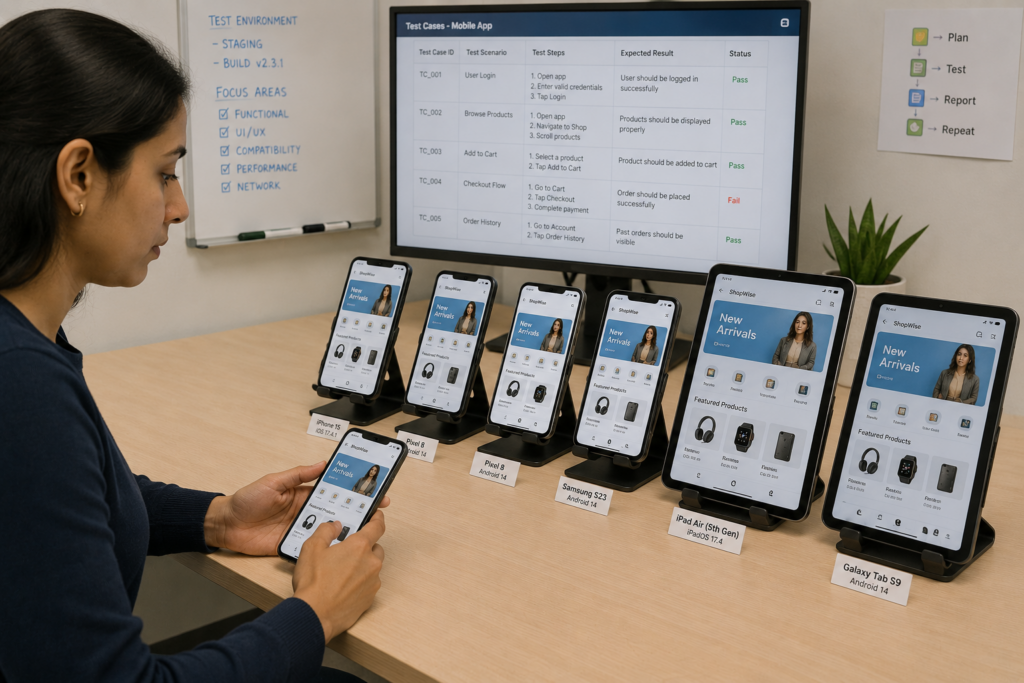
Testing, QA, and App Store Submission (£3,000–£15,000)
Professional QA for iOS app development covers device testing across iPhone and iPad models at different iOS versions (£2,000–£6,000), QA specialist time beyond developer self-testing (£3,000–£10,000), and App Store submission support including asset preparation, description writing, and handling Apple’s review feedback (£1,000–£3,000). Bugs discovered by users cost 10× more to fix than bugs caught during development.
Ongoing Maintenance and Updates (15–25% Annually)
iOS app development does not end at launch. Apps require continuous investment: bug fixes (£2,000–£6,000 annually), iOS version compatibility updates following Apple’s typically September release cycle (£3,000–£12,000 annually), security patches (£1,000–£4,000), minor feature enhancements (£1,000–£5,000+ per feature), and App Store Optimisation (£500–£2,000 quarterly). Budget 15–20% of initial iOS app development cost annually for proper maintenance.
How to Reduce iOS App Development Costs Without Sacrificing Quality
Start With a Properly Scoped MVP
The fastest way to waste money is building features users do not want. An MVP approach for iOS app development means identifying the single core value proposition, building only features essential to deliver that value, launching to real users quickly, and then iterating based on actual usage data. A full-featured iOS app development project might cost £80,000. The MVP covering 20% of features but delivering 80% of core value might cost £25,000 — launching in 10 weeks instead of 6 months, with £55,000 remaining to invest in exactly what users demonstrate they want.
Leverage Cross-Platform Frameworks Strategically
If you need both iOS and Android apps, cross-platform frameworks such as React Native or Flutter can reduce iOS app development costs by 30–50% compared to building separate native apps. However, complex apps requiring deep platform integration — HealthKit, ARKit, advanced iOS animations — often perform better as native iOS. For many commercial apps focusing on business logic rather than platform-specific features, cross-platform is the more economical choice.
Use Pre-Built Components and Libraries
The iOS development ecosystem includes thousands of production-ready open-source libraries: Alamofire for networking, Kingfisher for image loading and caching, SnapKit for programmatic UI layout, Charts for data visualisation, and Lottie for animations. Experienced iOS app development teams know which libraries are safe to use in production and which to avoid. Using proven libraries saves 20–40% of development time compared to building everything custom.
Hire a Blended Team by Seniority
You do not need a team of senior iOS app development specialists charging £100+ per hour. A cost-effective blended structure uses a senior iOS architect (£90–£135 per hour) for 20–30% of project time, one or two mid-level developers (£55–£85 per hour) for 60–70% of project time, and a junior developer (£30–£50 per hour) for 10–20% of project time. The senior architect makes critical decisions and reviews code. Mid-level developers handle feature development. The junior assists with routine tasks under supervision. This approach delivers senior-level architectural quality at a 30–40% lower blended hourly rate than an all-senior team.
Offshore Strategically With UK Leadership
UK-based iOS app development costs £55–£135 per hour. Eastern European developers with comparable skill levels typically cost £25–£60 per hour. A hybrid model — a UK-based senior iOS architect leading the project and handling client communication, with an offshore team handling implementation — provides senior UK expertise for critical decisions, 40–60% cost savings on implementation hours, and UK timezone alignment for key communications. This model requires clear specifications and strong project management but can reduce total iOS app development costs by 35–50%.
Invest in Proper Discovery Before Development
£8,000–£15,000 spent on discovery saves multiples of that during development. User research identifies actual user needs rather than assumptions. Competitive analysis reveals lessons from competitors’ successes and failures. Technical feasibility work surfaces potential blockers early. Feature prioritisation ensures you build only what truly matters. And architecture planning prevents expensive rewrites later. Discovery transforms vague ideas into concrete specifications — developers work faster from clear specs, and you avoid building features that will not be used.
Frequently Asked Questions About iOS App Development Costs
How much does iOS app development cost in the UK?
Simple iOS app development projects (MVPs) cost £18,000–£40,000. Medium-complexity apps run £40,000–£90,000, and complex enterprise iOS apps cost £90,000–£300,000+. Costs depend on features, team composition, and project timeline.Is iOS app development more expensive than Android?
Yes, iOS app development typically costs 10–15% more than equivalent Android development due to Mac hardware requirements, Apple Developer Programme fees (£99 annually vs £25 once for Android), and Apple’s more rigorous testing and App Store submission processes.How long does iOS app development take?
Simple iOS app development projects take 8–14 weeks. Medium-complexity apps need 4–7 months, and enterprise iOS apps require 6–18 months. Timeline depends on feature complexity, team size, and integration requirements.Should I hire iOS app development freelancers or an agency?
For projects under £40,000 with clear scope, freelance iOS app development specialists often provide better value. For complex projects over £40,000, an app development agency offers team depth, process maturity, and risk mitigation that justify the premium.What percentage of the iOS app development budget should go to design?
Allocate 15–25% of your iOS app development budget to professional design. For a £60,000 app, that means £9,000–£15,000 for comprehensive UX research and UI design work.How much does iOS app development maintenance cost annually?
Budget 15–25% of your initial iOS app development cost annually for proper maintenance. A £60,000 app requires approximately £9,000–£15,000 per year for iOS updates, bug fixes, security patches, and minor enhancements.Can I build an iOS app cheaper than the quoted prices?
Budget iOS app development is possible through offshore teams (40–60% savings) or no-code platforms for very simple apps. However, professional commercial iOS app development that competes in the App Store requires investment in the ranges quoted above.What hidden costs should I budget for?
Beyond developer fees, budget for design (£5,000–£30,000), backend development (£12,000–£60,000), third-party services (£100–£800 per month), App Store fees (£99 per year plus 30% revenue commission), and annual maintenance (15–25% of initial build cost).How do London iOS app development rates compare to other UK cities?
London iOS app development rates are 20–30% higher than regional UK cities. Senior iOS developers cost £78,000–£110,000 annually in London, versus £66,000–£92,000 in Manchester or £68,000–£95,000 in Edinburgh.Should I build iOS first or launch on both iOS and Android?
If budget allows, cross-platform frameworks for simultaneous iOS app development and Android launch cost 30–50% less than building separately. If budget is tight, choose the platform that matches your target audience — iOS for higher-income users, Android for broader global reach.
Related Resources
- Mobile App Developers UK: Complete 2026 Pricing Guide
- App Development Company UK: How to Choose the Right Partner
- Android App Development UK: Complete Cost and Hiring Guide
- Mobile Application Development Guide: From Idea to Launch
- iOS App Development Process: Step-by-Step Guide for Businesses
- iOS App Development Timeline: How Long Does It Take?
- React Native vs Native iOS: Which Is Right for Your Project?
- How to Build a Mobile App MVP on a Budget
- How to Hire an iOS Developer in the UK: Complete Guide
- What Is a Technical Audit and Do You Need One?