

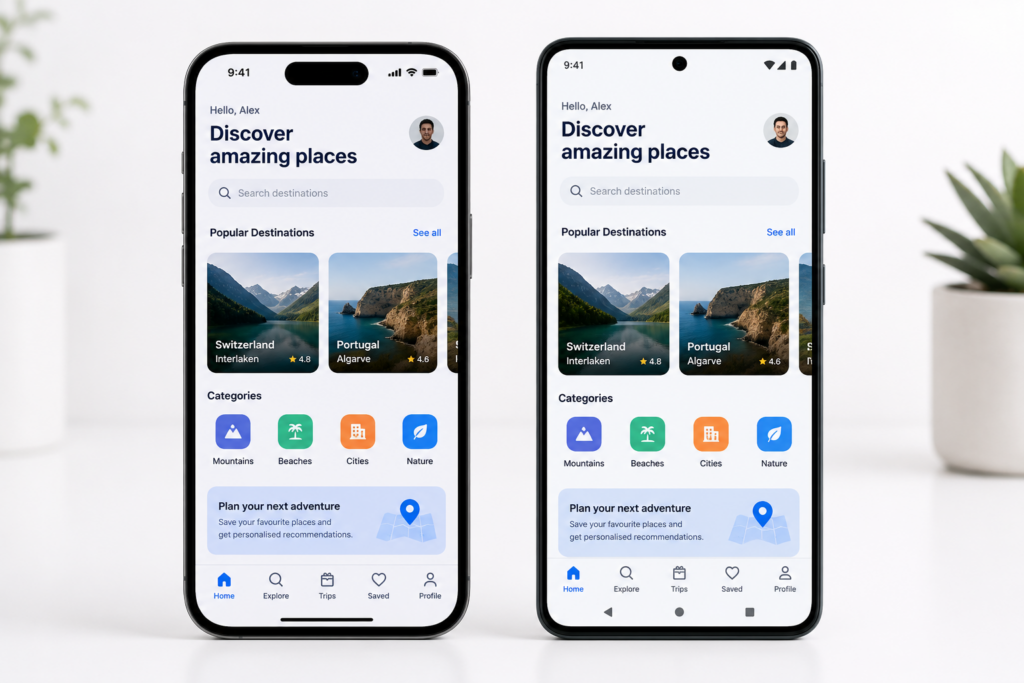
For most UK businesses, cross-platform app development represents the smartest commercial decision when launching a mobile product. The ability to build one codebase that runs seamlessly on both iOS and Android reduces development cost, accelerates time to market, and simplifies ongoing maintenance — without meaningful compromise on quality for the majority of applications.
But choosing the right framework and the right development team is critical. React Native and Flutter are the two dominant cross-platform technologies, and each has genuine strengths that suit different types of projects.
What Is Cross-Platform App Development?
Cross-platform app development is the practice of writing a single codebase that compiles into native applications for both iOS and Android. Rather than maintaining two separate codebases in Swift and Kotlin, cross-platform frameworks allow mobile app developers to write shared logic once and deploy to both platforms simultaneously.
Flutter vs React Native: Which Should You Choose?
Flutter, developed by Google using the Dart language, renders its own UI widgets rather than relying on native components. This gives Flutter apps pixel-perfect consistency across platforms and makes it the preferred choice for visually distinctive, animation-rich applications. React Native, developed by Meta using JavaScript, renders native UI components and integrates more naturally with existing JavaScript and TypeScript codebases — making it a strong choice for teams with web development experience.
When Is Cross-Platform the Right Choice?
- Budget — cross-platform development typically costs 30 to 50 per cent less than building two native apps.
- Timeline — a single shared codebase means faster delivery to both platforms.
- Maintenance — one codebase to update, debug, and extend rather than two.
- Use case — SaaS tools, e-commerce apps, marketplaces, and enterprise tools are all ideal cross-platform candidates.
| ⚡ BUILD FASTER WITH CROSS-PLATFORM Cut development cost by up to 50% without sacrificing quality. Our Flutter and React Native experts will scope your project and recommend the right approach. |
Frequently Asked Questions
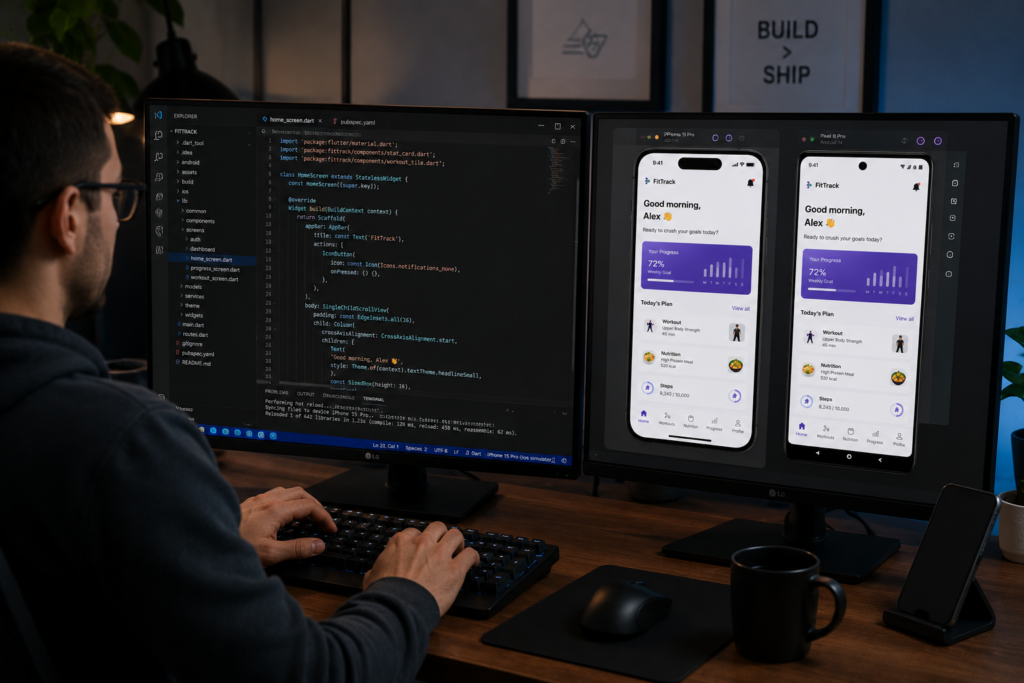
The most common questions about cross-platform app development — answered clearly.
What is the difference between cross-platform and native app development?
Cross-platform app development uses a single shared codebase to build apps that run on both iOS and Android, while native development creates separate apps for each platform using Swift for iOS and Kotlin for Android. Native development offers the best possible performance and deepest device integration, while cross-platform development offers significant cost and time savings with near-native quality for most applications.
Is Flutter better than React Native in 2026?
Flutter and React Native are both excellent choices in 2026, and the better option depends on your project’s requirements. Flutter excels at visually rich, animation-heavy applications with pixel-perfect cross-platform consistency. React Native is better suited to teams with existing JavaScript expertise and projects requiring deep integration with native device APIs. Both frameworks are mature, well-supported, and backed by major technology companies.
How much cheaper is cross-platform development compared to native?
Cross-platform app development is typically 30 to 50 per cent cheaper than building separate native iOS and Android applications. Instead of two separate codebases requiring two specialist teams, a single cross-platform team delivers both platforms simultaneously. For most UK businesses, this makes cross-platform the most commercially sensible approach.
Does cross-platform development mean worse performance?
Cross-platform development does not mean worse performance for the vast majority of commercial applications. Modern frameworks like Flutter and React Native deliver near-native performance for business tools, e-commerce apps, social platforms, and content applications. The performance gap with fully native code is only meaningful for highly intensive use cases such as 3D gaming or real-time signal processing.
Can cross-platform apps access device hardware like the camera and GPS?
Yes, cross-platform apps built with Flutter or React Native can access device hardware including the camera, GPS, push notifications, biometric authentication, Bluetooth, and most other native device capabilities through platform-specific plugins and bridge APIs. The availability and quality of these plugins has improved dramatically and covers the vast majority of commercial use cases.
What is Flutter and who uses it?
Flutter is Google’s open-source UI framework for building cross-platform mobile, web, and desktop apps from a single Dart codebase. It is used by major companies including BMW, eBay, and Alibaba for production applications. Flutter’s distinctive advantage is its custom rendering engine, which delivers consistent, beautiful UIs across all platforms without relying on native UI components.
What is React Native and who uses it?
React Native is Meta’s open-source framework for building cross-platform mobile apps using JavaScript and React. It renders native UI components rather than custom widgets, giving React Native apps a look and feel that integrates naturally with each platform’s design language. It is used by major companies including Facebook, Instagram, Shopify, and Microsoft Teams.
Can I migrate my existing native app to cross-platform?
Yes, it is possible to migrate an existing native iOS or Android app to a cross-platform framework, however this is typically a significant undertaking that effectively involves a rebuild rather than a conversion. In many cases, a phased approach — migrating module by module — is more practical than a full rewrite. Our team can assess your existing codebase and recommend the most cost-effective migration strategy.
How long does cross-platform app development take?
Cross-platform app development typically takes between 3 and 9 months, broadly similar to native iOS development but delivering both platforms simultaneously. A simple cross-platform MVP can be delivered in 10 to 14 weeks. More complex applications with extensive integrations and custom back-ends generally take 5 to 8 months.
Does Stakk recommend Flutter or React Native for most projects?
Stakk recommends Flutter for most new cross-platform projects in 2026 due to its exceptional UI consistency, fast rendering performance, and Google’s strong ongoing investment in the framework. We recommend React Native for teams with existing JavaScript expertise or projects requiring tight integration with web-based systems. We are experienced in both and will recommend the right framework based on your specific project requirements.
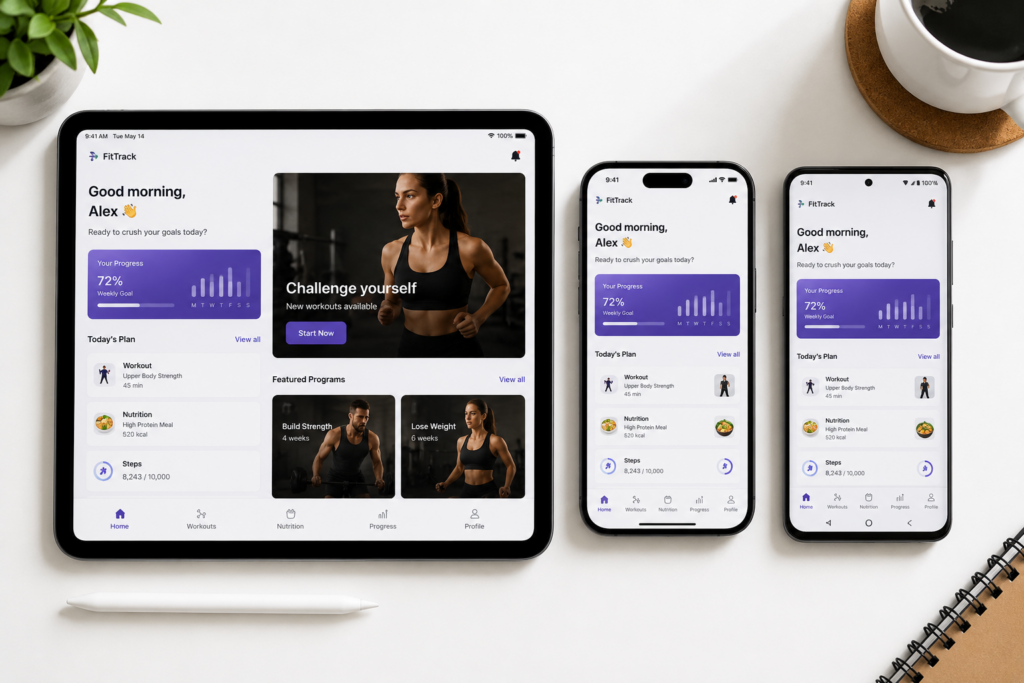
| ⚡ ONE CODEBASE. TWO PLATFORMS. REAL RESULTS. Stakk’s cross-platform team delivers production-quality apps on iOS and Android simultaneously. Get your free strategy session today. |
Key Takeaways
- Cross-platform app development allows for a single codebase that runs on both iOS and Android, saving costs and reducing time to market.
- Choosing between Flutter and React Native depends on project needs; Flutter is ideal for rich UIs while React Native suits JavaScript expertise.
- Cross-platform development is typically 30-50% cheaper than native apps, making it a commercially sensible option for UK businesses.
- The right choice for cross-platform is often based on budget, timeline, maintenance needs, and the type of application.
- Experts recommend Flutter for new projects in 2026, while React Native fits teams with existing JavaScript skills or deep native integration requirements.
About the Author
| Jack Tyson | Director, Stakk Jack Tyson is the Director of Stakk and has spent 12 years building mobile applications for start-ups, scale-ups, and global brands. With hands-on experience across iOS, Android, and cross-platform development, Jack brings both technical expertise and commercial insight to every project. 🔗 Connect with Jack: LinkedIn URL |
Blog Post 105 | Primary Keyword: cross-platform app development | Stakk Content Strategy | Published: June 2026
Estimated reading time: 7 minutes