


React Native has powered some of the world’s most-used mobile applications — including Facebook, Instagram, and Shopify — since Meta open-sourced it in 2015. A decade later, it remains one of the most commercially proven cross-platform frameworks available, with a vast ecosystem of libraries, active community support, and a significant architectural upgrade in the form of the New Architecture (JSI and Fabric) that addressed many of its historical performance limitations.
At Stakk, we have delivered production React Native apps across e-commerce, SaaS, and consumer platforms, and we continue to recommend it for the right projects.
What Is React Native?
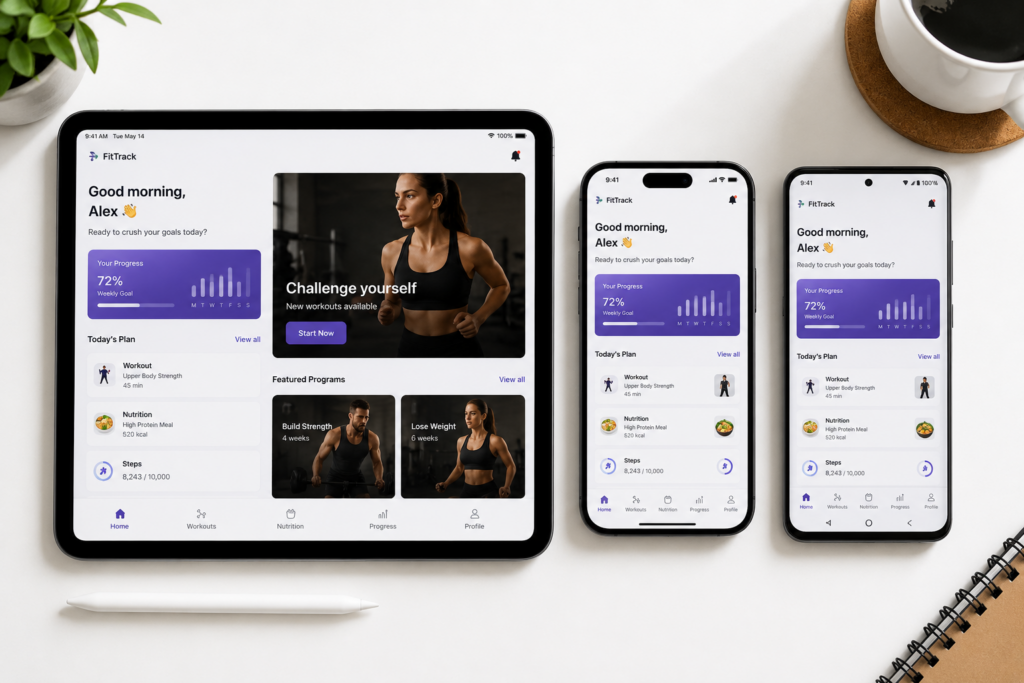
React Native is Meta’s open-source framework for building cross-platform mobile applications using JavaScript and React. Unlike Flutter, which renders its own custom UI, React Native bridges JavaScript logic to native iOS and Android UI components. This means React Native apps render using the same native elements as fully native apps — with the iOS navigation looking like iOS and the Android controls looking like Android — giving users a familiar, platform-appropriate experience.
Who Should Choose React Native?
- Teams with JavaScript expertise — React Native is the fastest path to mobile if your developers already know JavaScript and React.
- Shared codebases with web — React Native apps can share significant logic with React web applications.
- Large plugin ecosystems — npm’s JavaScript library ecosystem is enormous, providing solutions for almost any integration.
- Companies scaling web teams to mobile — React Native is the lowest-friction transition for established web development teams.
⚛️ BUILD WITH REACT NATIVE
Stakk’s React Native team delivers production-quality iOS and Android apps using JavaScript. If you have a web team and need to go mobile fast, let’s talk.
Frequently Asked Questions
Everything businesses need to know about React Native development in 2026.
What is React Native and how does it work?
React Native is Meta’s open-source framework for building iOS and Android apps using JavaScript and React. It works by running JavaScript logic on a separate thread and communicating with native UI components through a bridge (or, in the New Architecture, through JSI for direct synchronous access). This allows developers to write a single JavaScript codebase that renders native UI elements on both platforms, delivering a platform-appropriate look and feel.
Is React Native still relevant in 2026?
Yes, React Native is absolutely still relevant in 2026. The framework received a major architectural overhaul — the New Architecture, including JSI and Fabric — that significantly improved performance and eliminated many historical pain points. It is backed by Meta and actively maintained, powers production apps for companies including Microsoft, Shopify, and Coinbase, and has one of the largest mobile developer communities globally.
What is the React Native New Architecture?
The React Native New Architecture is a set of fundamental improvements introduced progressively since 2022, including the JavaScript Interface (JSI) which replaces the old asynchronous bridge with direct synchronous calls to native code, and Fabric, a new rendering system that improves UI responsiveness. Together, these changes make React Native significantly faster, more reliable, and better suited to complex, animation-heavy applications.
How much does React Native development cost in the UK?
React Native development in the UK typically costs between £25,000 and £200,000+ depending on complexity, the number of features, and back-end requirements. The cost advantage over native development comes from a single shared codebase delivering both iOS and Android, reducing overall project cost by 30 to 50 per cent. Stakk provides fixed-price proposals based on a detailed discovery and scoping session.
Can React Native access device hardware like camera and Bluetooth?
Yes, React Native can access a wide range of device hardware including camera, GPS, Bluetooth, NFC, push notifications, biometric authentication, accelerometer, and local storage through its community and core library ecosystem. For features without an existing library, native modules can be written in Swift or Kotlin and bridged to JavaScript, giving React Native apps access to virtually any device capability.
What is the difference between React Native and React?
React is Meta’s JavaScript library for building web user interfaces — it runs in browsers and produces HTML and CSS. React Native uses the same React component model and JavaScript but renders native iOS and Android UI components instead of HTML elements. The two share concepts (components, props, state, hooks) but produce entirely different types of applications — web versus mobile.
Can I share code between a React Native app and a React web app?
Yes, React and React Native can share a significant portion of business logic, API integration code, state management, and utility functions. UI components must be written separately since React uses HTML/CSS and React Native uses native components. Libraries like React Native Web and Expo allow some UI component sharing, though most production projects maintain separate UI layers for web and mobile with shared business logic.
How do I find React Native developers in the UK?
To find React Native developers in the UK, look for agencies with published React Native portfolios, check for contributions to the React Native open-source ecosystem, review Clutch profiles for React Native-specific project experience, and request case studies of similar React Native projects. A credible React Native developer should be familiar with state management patterns (Redux, Zustand, Context), testing approaches, and performance optimisation techniques.
Does Stakk prefer Flutter or React Native?
Stakk recommends Flutter as the default for most new cross-platform projects due to its rendering performance, UI consistency, and Google’s strong ongoing investment. However, we recommend React Native when clients have existing JavaScript or React expertise, need close code sharing with a React web application, or have specific integration requirements that are better served by the npm ecosystem. Both frameworks are in active production use in our client portfolio.
⚛️ REACT NATIVE EXPERTS AT YOUR SERVICE
From MVP to enterprise scale — Stakk’s React Native developers have the experience to deliver. Free consultation and project estimate available now.
Jack Tyson | Director, Stakk
Jack Tyson is the Director of Stakk and has spent 12 years building mobile applications for start-ups, scale-ups, and global brands. With hands-on experience across iOS, Android, and cross-platform development, Jack brings both technical expertise and commercial insight to every project.
🔗 Connect with Jack: LinkedIn URL
Key Takeaways
- React Native development powers popular apps like Facebook and Instagram, thanks to its efficient cross-platform capabilities.
- It bridges JavaScript logic to native UI components, delivering a familiar look across iOS and Android platforms.
- Teams with JavaScript expertise or web development experience can easily transition to mobile using React Native.
- The New Architecture introduces enhancements like JSI and Fabric, significantly improving performance and reliability.
- Stakk offers experienced React Native developers for both MVPs and enterprise applications, highlighting strong community support.
Estimated reading time: 6 minutes