

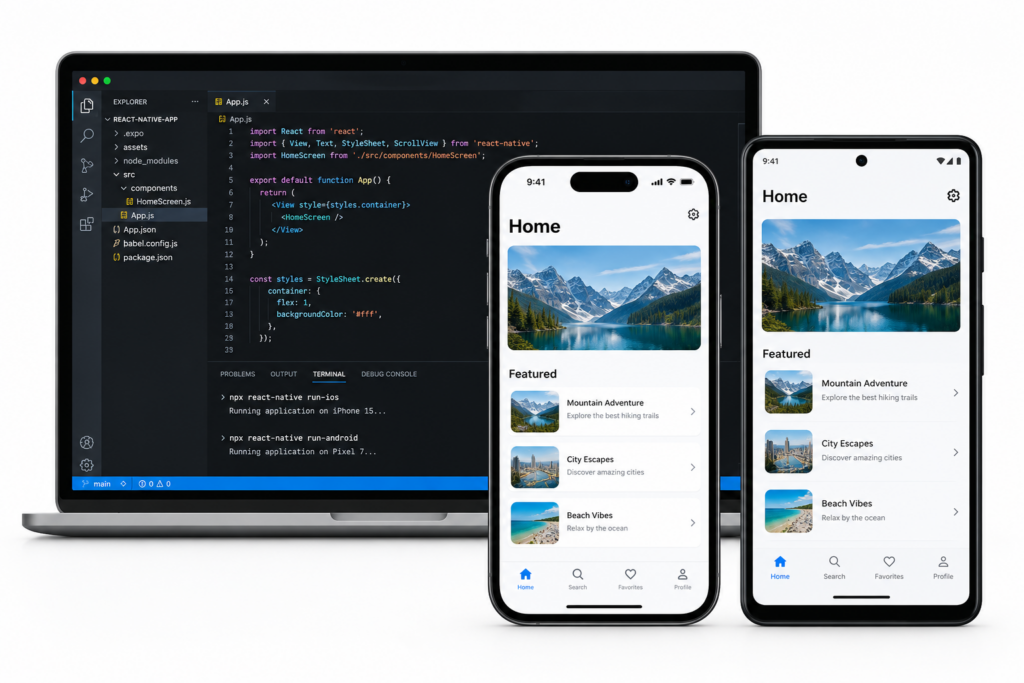
React Native is Meta open-source cross-platform mobile framework that allows developers to build iOS and Android apps using JavaScript and React. Unlike Flutter which renders its own UI, React Native bridges to native UI components. This gives apps a platform-native feel while sharing the majority of application logic between platforms.
At Stakk, React Native is our recommended cross-platform framework when a client has an existing React web team, a significant JavaScript codebase, or a strong preference for the JavaScript ecosystem. It is an excellent choice for the right project. However, there are some important trade-offs to understand.
When React Native Is the Right Choice
- Existing React web team – React Native allows web developers to build mobile apps with familiar patterns. This significantly reduces the learning curve.
- Code sharing with web – React Native Web allows some code sharing between mobile and web React codebases.
- Platform-native UI feel – React Native uses native UI components, so iOS apps look iOS-native and Android apps look Android-native.
- Large ecosystem – the npm ecosystem provides extensive packages for most integration needs.
React Native vs Flutter: Key Differences
The main trade-off between React Native and Flutter is rendering approach. React Native renders platform-native UI components, producing apps that feel native to each platform but requiring more platform-specific code for platform-aware behaviour. On the other hand, Flutter renders its own UI, producing visually consistent apps across platforms but with a non-native look and feel. For most commercial apps, both are excellent choices. The decision is driven by team expertise and platform-feel preference.
| Build iOS and Android With Your React Team React Native lets your existing JavaScript developers build mobile apps. Stakk React Native developers deliver cross platform apps efficiently. Free consultation. |
Frequently Asked Questions
What businesses need to know about building mobile apps with React Native.
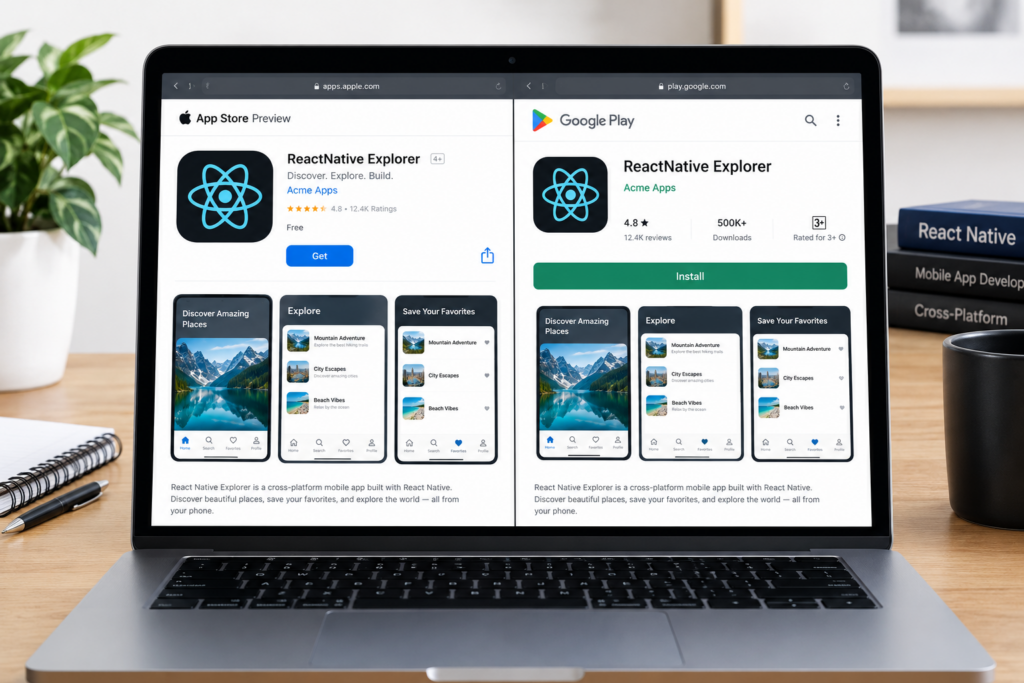
What is React Native?
React Native is Meta open-source cross-platform mobile framework that allows developers to build iOS and Android apps using JavaScript and React, rendering platform-native UI components rather than custom-rendered widgets. This gives React Native apps a native look and feel on each platform while sharing the majority of application logic.
How is React Native different from regular React?
React in a browser renders HTML DOM elements. React Native replaces HTML elements with mobile UI components: View instead of div, Text instead of p, FlatList instead of ul. The React paradigm including components, props, state, and hooks remains the same, so React web developers find React Native familiar. The difference is in the component library and platform-specific behaviour.
What is Expo and should I use it for React Native development?
Expo is a framework and platform built on top of React Native that provides a managed workflow with pre-built native modules, over-the-air update capability, and simplified build and submission tooling. Expo managed workflow is excellent for apps that can work within its standard module set. For apps requiring custom native modules or deep hardware integration, the bare workflow or plain React Native is more appropriate.
Can React Native access all native device features?
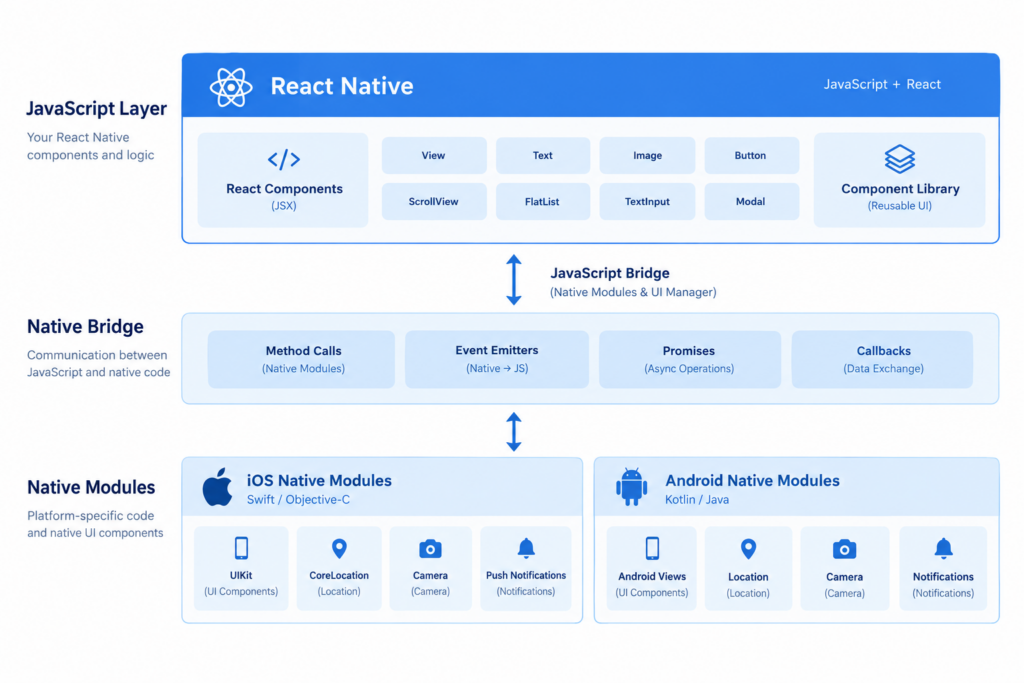
Yes, React Native apps can access camera, GPS, biometric authentication, push notifications, Bluetooth, NFC, and most native device features through the React Native core library and community packages from the npm ecosystem. For platform capabilities not covered by existing packages, native modules written in Swift for iOS and Kotlin for Android can be bridged into the JavaScript layer.
What is the new React Native architecture?
React Native introduced a new architecture in version 0.71 and beyond, replacing the bridge-based communication between JavaScript and native code with the JavaScript Interface (JSI), enabling synchronous communication and significantly improving performance. The new architecture also introduces concurrent rendering through React 18 integration and a more efficient rendering engine called Fabric.
How does React Native handle iOS and Android platform differences?
React Native handles platform differences through the Platform API which allows conditional rendering or logic based on the operating system, platform-specific file extensions (Component.ios.js and Component.android.js) for components that need entirely different implementations on each platform, and the StyleSheet API which handles most visual differences automatically. Platform-specific work is typically 10 to 20 percent of total development for most apps.
What is over-the-air update in React Native?
Over-the-air update allows JavaScript and asset changes in a React Native app to be deployed directly to users without going through the App Store review process, using services like Expo EAS Update or Microsoft CodePush. This enables rapid bug fixes and UI changes without the one to three day App Store review cycle, though JavaScript-only changes must not introduce new native module requirements.
What are the performance considerations for React Native?
React Native performance is excellent for most commercial applications. Areas requiring attention include list rendering (use FlatList rather than ScrollView for long lists), image loading and caching, JavaScript thread blocking (heavy computation should be moved to native modules or web workers), navigation transitions (React Navigation is well-optimised), and Hermes the JavaScript engine now enabled by default which significantly improves startup time.
How much does React Native development cost?
React Native development typically costs 30 to 45 percent less than building two separate native iOS and Android apps. For businesses with existing JavaScript or React teams, the cost advantage is even greater as developers can contribute to mobile without a new technology learning curve. A mid-complexity React Native app targeting both platforms typically costs 40,000 to 150,000 pounds.
Does Stakk prefer React Native or Flutter?
Stakk recommends the right framework for each specific project rather than having a single preference. Flutter is recommended for most new cross-platform projects where the team is starting fresh, due to its superior animation performance and visual consistency. React Native is recommended when the client has existing JavaScript or React development resource, wants platform-native UI behaviour, or has a strong JavaScript ecosystem preference.
| React Native Is the Smart Choice for JavaScript-First Teams Leverage your existing React expertise to build iOS and Android apps. Stakk recommends React Native for the right project. Free strategy session. |
About the Author
| Jack Tyson | Director, Stakk Jack Tyson is the Director of Stakk and has spent 12 years building mobile applications for start-ups, scale-ups, and global brands. With hands-on experience across iOS, Android, and cross-platform development, Jack brings both technical expertise and commercial insight to every project. |
Blog 287 | React Native development | Stakk Content Strategy | October 2026