
The education sector has been transformed by digital technology. Moreover, mobile apps play an increasingly central role in how schools, universities, and training providers communicate with students, parents, and staff. However, the most impactful education sector apps do not just digitise existing processes. Instead, they create new possibilities for communication, learning, and operational efficiency.
Stakk has delivered apps for schools, multi-academy trusts, further education colleges, and university departments. They understand the unique requirements of education institutions including safeguarding obligations and data protection for children. Furthermore, they recognize the diverse digital literacy of the user base.
Types of App the Education Sector Builds
- Parent communication apps – school updates, teacher messaging, attendance alerts, and event booking.
- Student apps – timetables, campus maps, student services directories, and learning resource access.
- Staff apps – internal communication, shift and cover management, document sharing, and HR self-service.
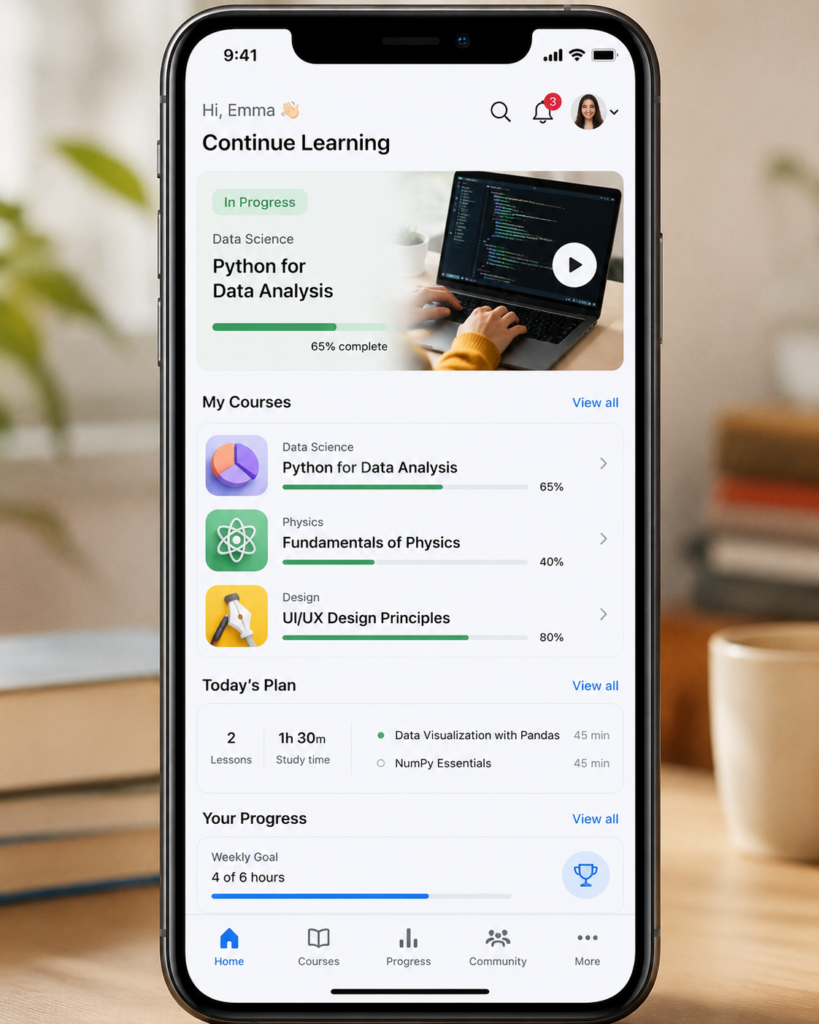
- Learning apps – course content delivery, assessment, progress tracking, and student engagement.
Safeguarding and Data Protection in Education Apps
Education apps must take safeguarding and data protection particularly seriously. Apps used by or about children are subject to the UK GDPR Children Code requirements. They must never allow direct contact between children and unknown adults. Additionally, they should be designed with minimal data collection and transparent purpose in line with DfE guidance on school data.
| Build Education Technology That Makes a Difference Stakk builds school, university, and training provider apps with safeguarding and data protection built in from day one. Free consultation. |
Frequently Asked Questions
What UK schools, universities, and education providers need to know about building mobile apps.
What types of app do schools typically build?
Schools typically build parent communication apps for updates, messaging, and event booking, student information apps for timetables and resources, attendance and behaviour tracking apps, staff communication and HR self-service apps, and learning apps for curriculum content delivery.
What types of app do universities typically build?
Universities typically build student experience apps with timetables, campus maps, and student services, learning management system companion apps, accommodation and campus facility booking apps, alumni engagement apps, and staff collaboration and research management tools.
What data protection requirements apply to education sector apps?
Education sector apps must comply with UK GDPR and the Data Protection Act 2018. Apps handling data about children must meet the ICO Age Appropriate Design Code requirements. Schools processing personal data must register with the ICO and follow DfE data protection guidance. Apps handling special category data including health information require explicit consent.
What is the ICO Children Code and does it apply to my school app?
The ICO Age Appropriate Design Code applies to online services likely to be accessed by children under 18. School apps that students access are subject to the Code, requiring privacy by default, data minimisation, no profiling for commercial purposes, and high privacy settings as the default. Purpose limitation and transparent privacy notices at an age-appropriate reading level are mandatory.
How do education apps handle parental consent?
Apps used by children under 13 must obtain verifiable parental consent before processing personal data for non-essential purposes. Apps for children 13 to 15 require parental consent for certain processing activities. Schools typically obtain parental consent through their data processing consent forms issued at student registration. Education app privacy notices must be clear, accessible, and age-appropriate.
Can a school use a parent communication app instead of email?
Yes, and parent communication apps typically achieve significantly higher engagement rates than email because push notifications are more likely to be seen than email in a crowded inbox. Key advantages include instant delivery, read receipts, two-way messaging, media sharing, and translation features for multilingual parent communities. The app must comply with GDPR for communication data processing.
What is MIS integration for school apps?
MIS stands for Management Information System and is the core database school apps like SIMS, Arbor, and iSAMS use to manage student records, attendance, timetables, and reporting. School apps typically integrate with the MIS through APIs to import student and class data, sync timetable information, and write attendance records back to the central system automatically.
How much does a school app cost?
A focused school parent communication app typically costs 20,000 to 50,000 pounds. More comprehensive school apps covering student, staff, and parent functionality with MIS integration typically cost 50,000 to 120,000 pounds. Multi-academy trust apps with central management and per-school customisation are at the higher end of this range.
What is a multi-academy trust app?
A multi-academy trust app serves multiple schools within a trust under a single branded platform, with central trust management of communications and content alongside school-specific sections for each constituent school. Trust-level apps enable consistent digital communication standards across all schools while maintaining individual school identity and autonomy within a shared technical platform.
Can university apps integrate with learning management systems?
Yes, university student apps commonly integrate with LMS platforms including Moodle, Blackboard, Canvas, and Microsoft Teams for Education through their respective APIs, allowing students to access course content, receive assignment notifications, and submit coursework through a unified mobile interface rather than switching between multiple platforms.
| Your Education Institution Deserves Better Digital Tools From parent communication to student apps, Stakk delivers education sector technology that improves outcomes. Free strategy session. |
About the Author
| Jack Tyson | Director, Stakk Jack Tyson is the Director of Stakk. He has spent 12 years building mobile applications for start-ups, scale-ups, and global brands. With hands-on experience across iOS, Android, and cross-platform development, Jack brings both technical expertise and commercial insight to every project. |
Blog 168 | app development for education sector | Stakk Content Strategy | June 2026
Estimated reading time: 5 minutes