

Every app that ships with critical bugs is an app whose users will abandon. Its App Store rating will suffer as a result. Quality assurance is a fundamental part of the development process. It determines whether your product succeeds or fails in the hands of real users.
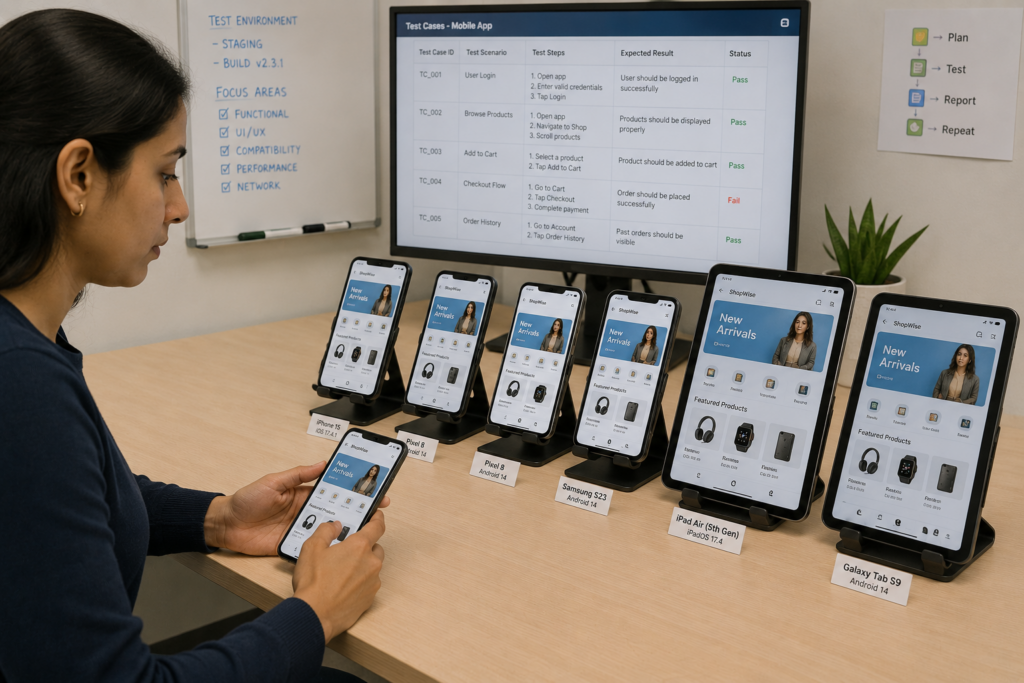
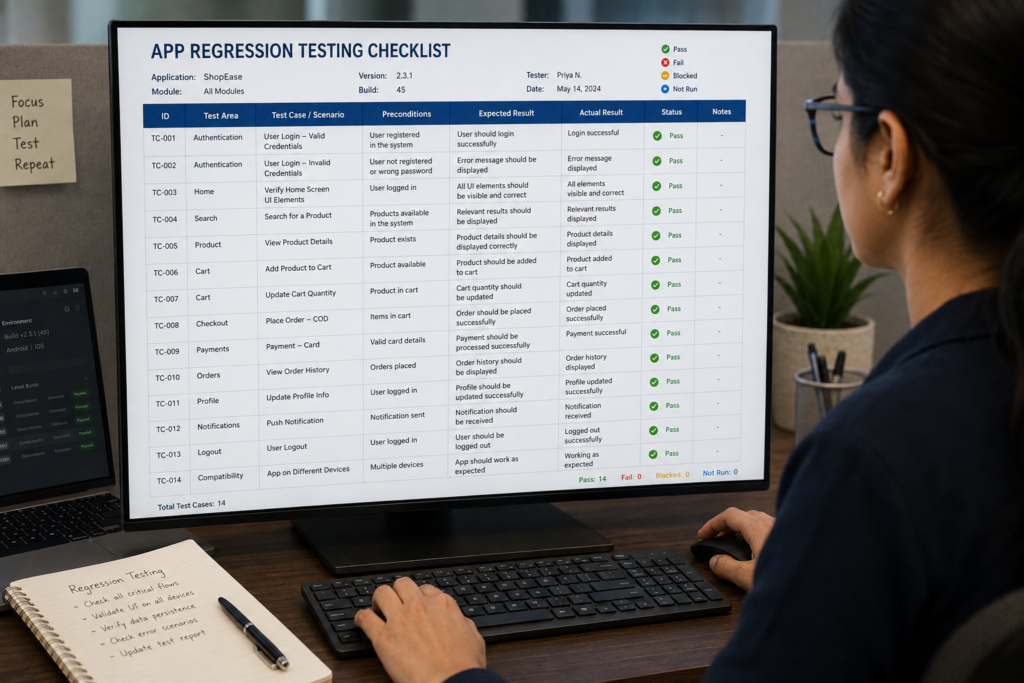
At Stakk, QA is embedded throughout every project rather than bolted on at the end. Our QA engineers begin writing test cases during the design phase. In addition, they test new features as they are built in each sprint. They also conduct a thorough pre-launch regression test before every App Store submission.
What Does Mobile App Testing Actually Cover?
Comprehensive mobile app testing covers five distinct disciplines. Functional testing verifies that every feature works exactly as specified. Performance testing measures load times, frame rates, and memory usage. Security testing probes for vulnerabilities. Accessibility testing ensures the app is usable by people with disabilities. Compatibility testing verifies consistent behaviour across devices and OS versions.
Manual Testing vs Automated Testing
- Manual testing – a human QA engineer uses the app as a real user would. The engineer explores edge cases and exercises judgement about usability.
- Automated testing – code-based tests that run repeatedly with zero human effort, ideal for regression testing.
- Device lab testing – testing on a range of real physical devices, not just simulators, which catch hardware-specific issues.
The Most Expensive QA Mistake
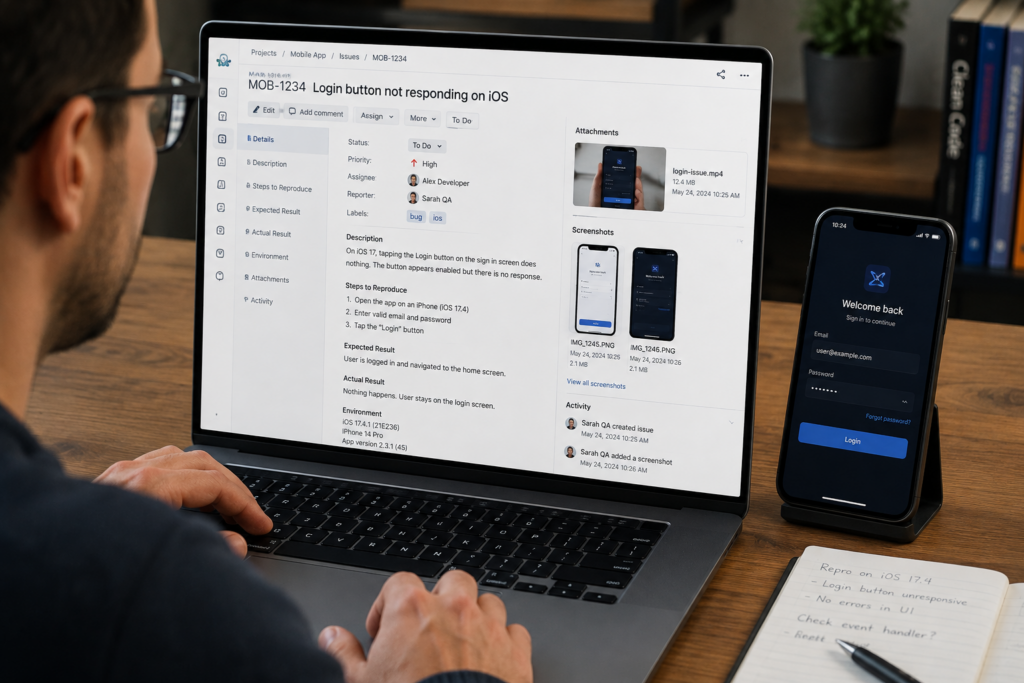
The most expensive QA mistake is treating testing as the final phase before launch. Bugs found in QA cost ten times more to fix than bugs caught during development. Bugs found by users in production cost a hundred times more.
Ship an App Without Critical Bugs
Stakk QA engineers test iOS and Android apps thoroughly. Free consultation on your QA strategy.
Frequently Asked Questions
The most important questions about testing mobile apps before and after launch.
What is mobile app testing and why is it important?
Mobile app testing is the systematic process of verifying that a mobile application functions correctly, performs well, is secure, and delivers a consistent experience across devices and OS versions. The cost of fixing a bug in production is estimated to be 10 to 100 times higher than fixing the same bug during development.
What is the difference between manual and automated mobile app testing?
Manual testing involves a human QA engineer exploring user journeys and evaluating usability. Automated testing uses code-based scripts that simulate interactions and verify outcomes programmatically. Manual testing is irreplaceable for usability evaluation; automated testing is superior for regression checking.
What is regression testing in mobile app development?
Regression testing re-tests previously working features after new code has been added, verifying that new development has not broken existing functionality. Automated regression test suites verify hundreds of test cases in minutes rather than hours.
What tools are used for automated mobile app testing?
Widely used tools include Appium, XCUITest for iOS, Espresso for Android, Detox for React Native, and XCTest. Cloud platforms including BrowserStack and Sauce Labs allow tests to run across hundreds of real devices.
What is device compatibility testing for mobile apps?
Device compatibility testing verifies a consistent experience across smartphones, tablets, and OS versions. The Android ecosystem has thousands of device combinations requiring a representative testing sample.
What is accessibility testing for mobile apps?
Accessibility testing verifies an app is usable by people with disabilities, including screen reader testing with VoiceOver and TalkBack, colour contrast verification, and keyboard navigation checks.
What is beta testing for mobile apps?
Beta testing releases a near-final app version to real users before public launch, using TestFlight for iOS and Google Play testing tracks for Android. A beta with 50 to 200 users typically surfaces most production-critical issues.
What is A/B testing in mobile app QA?
A/B testing runs two feature variants simultaneously with different user cohorts to measure performance differences, implemented using Firebase Remote Config and analysed for statistical significance.
How do I test an app for security vulnerabilities?
Security testing involves static code analysis, dynamic testing of the running app, professional penetration testing, and automated scanning tools such as MobSF and OWASP ZAP.
How much does mobile app QA testing cost?
Mobile app QA testing typically costs 3,000 to 30,000 pounds depending on scope. A pre-launch regression test for a mid-complexity app costs 5,000 to 10,000 pounds; a comprehensive automated test suite adds 10,000 to 25,000 pounds.
| Do Not Let Bugs Reach Your Users Manual, automated, and device lab testing from Stakk expert QA team. Free consultation available. |
Estimated reading time: 5 minutes
About the Author
| Jack Tyson | Director, Stakk Jack Tyson is the Director of Stakk and has spent 12 years building mobile applications for start-ups, scale-ups, and global brands. With hands-on experience across iOS, Android, and cross-platform development, Jack brings both technical expertise and commercial insight to every project. Connect with Jack: https://www.linkedin.com/in/jacktyson/ |
Blog 41 | mobile app testing | Stakk Content Strategy | August 2026