


Finding the right mobile app developers can be the difference between a product that transforms your business and one that burns through your budget. Whether you’re a start-up launching your first app or an established brand scaling your digital offering, the UK market is packed with talented developers — but knowing what to look for is everything.
What Do Mobile App Developers Actually Do?
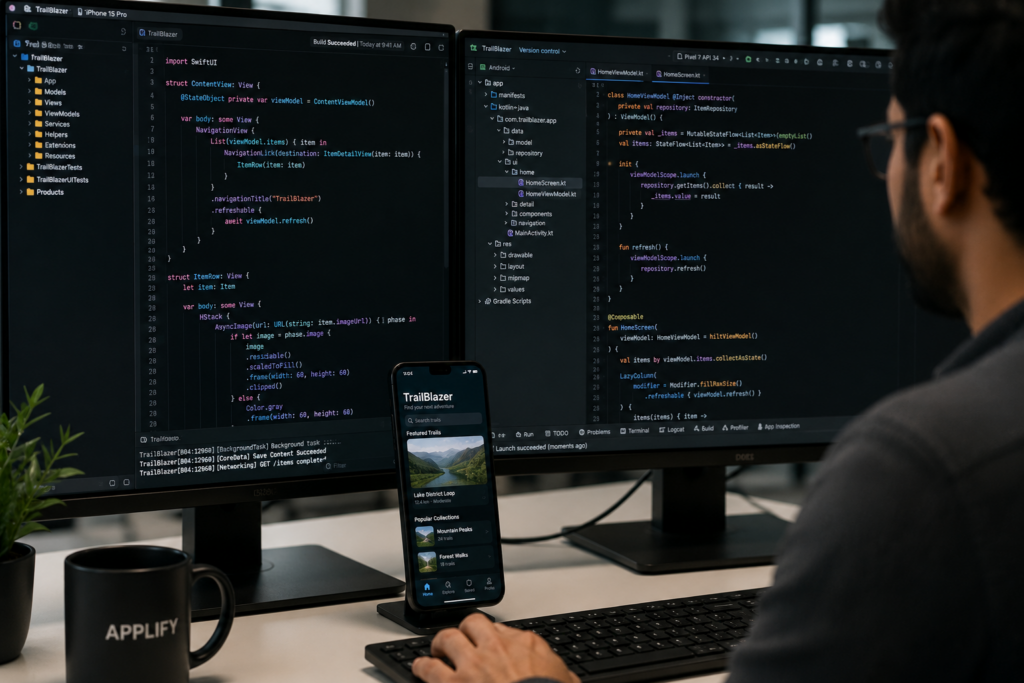
Mobile app developers design, build, test, and launch applications for iOS and Android devices. They work across the full development lifecycle — from scoping your idea and creating technical architecture through to building out every feature, ensuring quality assurance, and submitting your app to the App Store or Google Play.
Depending on the project, you might work with:
- iOS developers — specialist in Apple’s Swift language, building apps exclusively for iPhone and iPad.
- Android developers — experts in Kotlin or Java, targeting the broader global Android user base.
- Cross-platform developers — using React Native or Flutter to build once and deploy to both platforms, reducing cost and time to market.
Full-stack mobile developers — who handle both the front-end interface and back-end server logic your app depends on.
Why Choosing the Right Development Partner Matters
The UK app development market is highly competitive. With thousands of developers and agencies to choose from, it is tempting to default to the lowest quote. This approach rarely ends well. Poor-quality builds result in security vulnerabilities, poor app store ratings, negative user experiences, and costly rebuilds down the line.
When evaluating mobile app developers, look beyond their hourly rate. Scrutinise their portfolio for apps that match your complexity, read verified client reviews on platforms such as Clutch or Google, and always speak with the technical lead who will actually build your product — not just the account manager.
What Makes a Great Mobile App Development Agency?
The best mobile app developers combine technical excellence with strong communication, transparent processes, and a genuine understanding of your business goals. At Stakk, our team has spent over a decade building apps across sectors from fintech and healthcare to retail and logistics. We don’t just write code — we help you build something your users will love.
| 🚀 READY TO BUILD YOUR APP? Speak with our expert team about your app project. We’ll review your idea, assess the right technology, and give you an honest timeline and budget — with no obligation. Get Your Free App Strategy Session → |
Frequently Asked Questions About Mobile App Developers
Everything you need to know before hiring a mobile app development team.
How much does it cost to hire a mobile app developer in the UK?
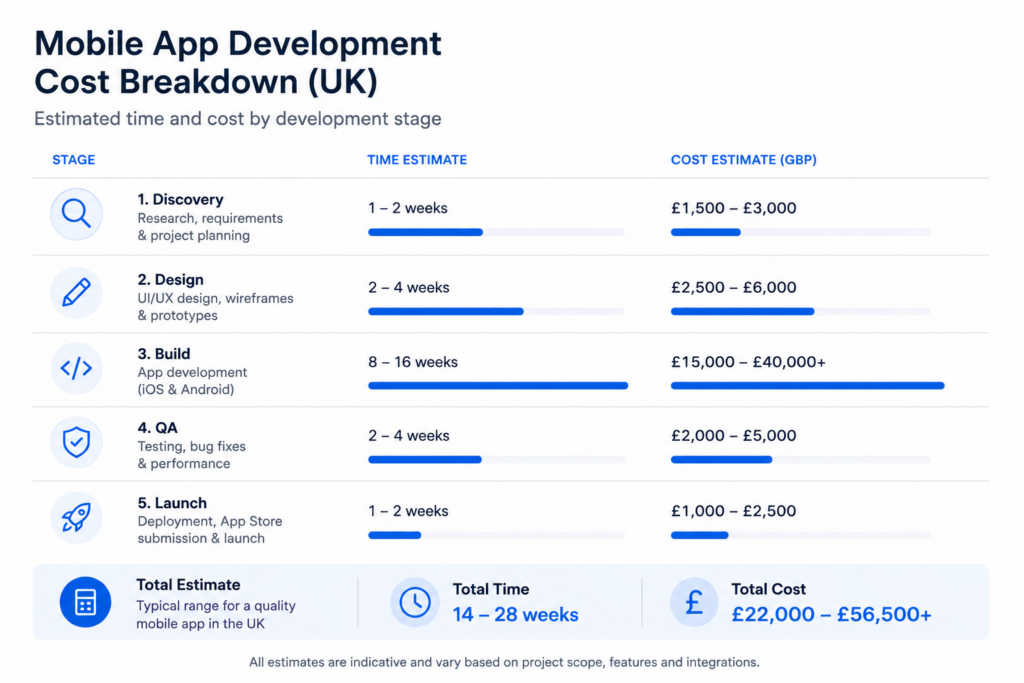
Hiring a mobile app developer in the UK typically costs between £50,000 and £250,000+ depending on the complexity of your project, the experience level of the team, and the number of platforms you are building for. A simple MVP with core functionality sits at the lower end, while feature-rich, enterprise-grade apps with integrations, custom APIs, and advanced security can exceed £300,000. Day rates for senior mobile app developers range from £400 to £850 per day. Agencies typically charge a fixed project fee or a monthly retainer, both of which include project management, design, QA, and ongoing support — making them more cost-effective than assembling a freelance team for larger projects.
How long does it take to develop a mobile app?
To develop a mobile app it typically takes between 4 and 12 months, however the exact timeline depends heavily on the scope and complexity of the project. A simple MVP — covering core user journeys with no complex integrations — can be delivered in as little as 10 to 14 weeks. A mid-complexity app with custom back-end, API integrations, and multiple user roles usually takes 5 to 8 months. Enterprise applications or apps with advanced features such as AI, real-time data, or complex payment flows often require 9 to 12 months or more. At Stakk, we provide a detailed project roadmap during the discovery phase so you know exactly what to expect before a single line of code is written.
What is the difference between iOS and Android app developers?
iOS and Android app developers differ primarily in the programming languages and tools they use. iOS developers build applications using Swift or the older Objective-C language, targeting Apple’s ecosystem across iPhone, iPad, and Apple Watch. Android developers write in Kotlin or Java, reaching the significantly larger global Android user base. The user interfaces, design guidelines, and app store submission processes are entirely different for each platform. Cross-platform mobile app developers use frameworks such as React Native or Flutter to write a shared codebase that compiles into native apps for both iOS and Android, reducing development time and cost — though pure native development typically delivers superior performance for complex applications.
Should I hire freelance app developers or a mobile app development agency?
You should hire a mobile app development agency for complex, high-stakes, or long-term projects where you need a complete team — including a project manager, UX designer, developer, and QA engineer — working cohesively under one roof. Agencies also provide continuity; if one team member leaves, the project carries on without disruption. Freelance mobile app developers can be a cost-effective option for small, well-defined projects or short-term feature work where you already have an in-house technical resource to manage them. For most businesses building their first app or scaling a digital product, an experienced agency provides significantly better risk management and delivery confidence.
What skills should mobile app developers have?
Mobile app developers should have a strong command of their core language — Swift for iOS, Kotlin for Android, or Dart and JavaScript for cross-platform — alongside practical experience with REST and GraphQL APIs, cloud platforms such as AWS, Google Cloud, or Azure, and version control using Git. Strong mobile app developers also understand UI/UX principles, accessibility standards, performance optimisation, and data security best practices such as encryption and secure authentication flows. Beyond technical skills, the best developers are effective communicators who can translate complex requirements into clear technical decisions and flag risks early. Always ask to see code samples or a live portfolio of shipped applications.
What is cross-platform app development and should I use it?
Cross-platform app development is the process of building a single codebase that runs natively on both iOS and Android devices, using frameworks such as Flutter (by Google) or React Native (by Meta). For most commercial projects, cross-platform development offers an excellent balance of cost, speed, and quality — you can reach both platforms for roughly 60 to 70 per cent of the cost of building two separate native apps. You should consider native iOS and Android development separately if your app requires intensive graphics processing, complex device hardware access, or you are operating in a sector such as gaming or augmented reality where performance is paramount. For SaaS tools, e-commerce apps, marketplaces, and internal business tools, cross-platform is typically the smart commercial choice.
How do I find reliable mobile app developers in the UK?
To find reliable mobile app developers in the UK, start with verified review platforms such as Clutch.co, Google Business, and Trustpilot, where you can read genuine client feedback and see completed project portfolios. Request case studies in your specific sector — an agency with experience in your industry will understand your compliance requirements, user expectations, and competitive landscape far better than a generalist. Always arrange a technical discovery call with the lead developer, not just a sales representative, and ask for references you can call directly. Red flags include vague timelines, unwillingness to share code ownership terms, and the absence of a formal discovery or scoping process before quoting.
What questions should I ask mobile app developers before hiring them?
Before hiring mobile app developers you should ask the following key questions: Who owns the source code when the project is complete? What is your development methodology — Agile, Scrum, or fixed-scope? How do you handle changes to scope during a project? What security standards do you follow during development? Do you provide post-launch support, and what does that include? Who will be my day-to-day point of contact? What happens if a key developer leaves mid-project? Can I speak directly with a client for whom you have built a similar product? The answers to these questions will reveal far more about a team’s reliability and professionalism than their portfolio alone.
How do mobile app developers charge for their work?
Mobile app developers typically use one of three pricing models. Fixed-price contracts agree the full scope, deliverables, and cost upfront — offering budget certainty but less flexibility for changes. Time-and-materials billing charges an agreed day or hourly rate for work completed, which suits projects where the scope may evolve. Retainer agreements provide ongoing access to a development team for a set monthly fee, ideal for continuous product development or long-term support. For new app builds, a phased fixed-price model — where each phase is priced and approved separately — is often the most transparent approach, as it gives you budget control whilst preserving the flexibility to adapt based on real user feedback.
Do mobile app developers provide ongoing support after launch?
Most professional mobile app developers offer structured post-launch support packages, however the scope varies significantly between agencies. As a minimum, post-launch support should cover critical bug fixes, compatibility updates when Apple or Google release major OS updates, and performance monitoring. Higher-tier retainers typically include ongoing feature development, analytics reporting, A/B testing support, and regular security audits. It is essential to agree the terms of post-launch support in your contract before development begins, including response time SLAs, what constitutes a bug versus a new feature, and how ongoing work will be scoped and priced. Launching an app without a support plan in place is one of the most common and costly mistakes businesses make.
READY TO BUILD YOUR APP?
Your app idea deserves an expert team. Stakk has been building mobile apps for over 10 years — delivering products that perform, convert, and grow. Get your free strategy session today and let’s turn your vision into a product your users will rely on.
Book Your Free App Strategy Session
Jack Tyson | Director, Stakk
Jack Tyson is the Director of Stakk and has spent 10 years as a mobile app developer building mobile applications for start-ups, scale-ups, and global brands. With hands-on experience across iOS, Android, and cross-platform development, Jack brings both technical expertise and commercial insight to every project. He is passionate about helping businesses make informed decisions about app development — from initial concept through to post-launch growth.
🔗 Connect with Jack: LinkedIn
Blog Post 183 | Primary Keyword: mobile app developers | Stakk | Mobile App Developers | Published: June 2026